
Iran and Israel Conflict 2026: Global Impact Analysis
By: Ehsaas BISP Info – Published: March 1, 2026
The Middle East has entered a dangerous new phase of conflict in 2026 as Iran and Israel — backed by the United States — are engaged in direct military confrontation that is already reshaping geopolitics, energy markets, global aviation, and regional alliances.
What Triggered the Conflict?
In late February 2026, the United States and Israel launched coordinated air and missile strikes on Iran, which were described by U.S officials as efforts to dismantle key Iranian military infrastructure and counter what they called growing threats from Tehran.
Early reports indicate that Iran’s Supreme Leader, Ayatollah Ali Khamenei, was reportedly killed in the strikes, though Iranian authorities have been inconsistent in confirming the exact status. This dramatic development has intensified the conflict further.
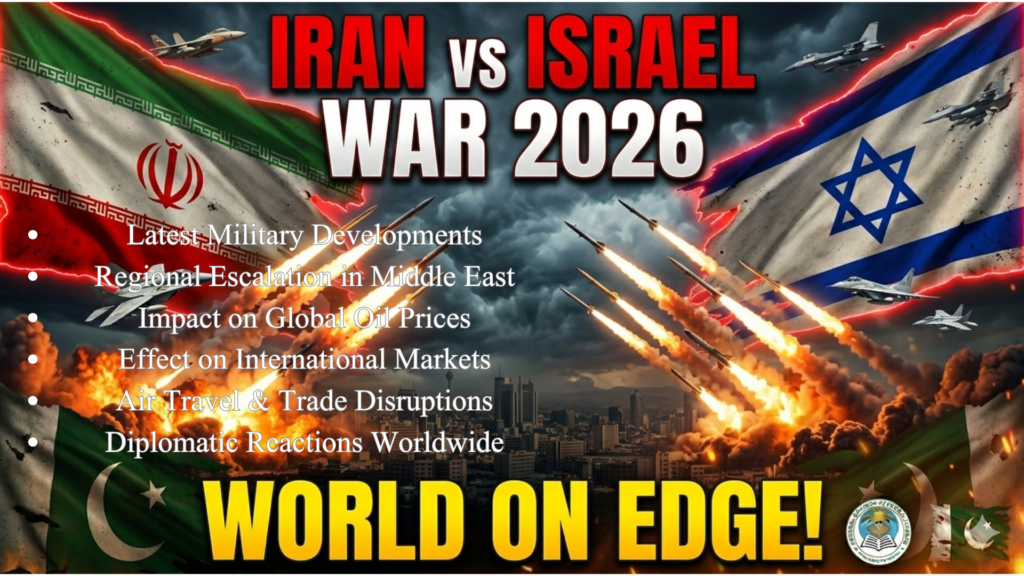
Iran responded with deep retaliatory strikes, firing ballistic missiles and drones toward Israel and U.S. military bases stationed across the Gulf region. Interchanges of strikes between Tehran and its adversaries continue to escalate.
Also Read:
Pakistan vs Afghanistan 2026 – Latest Updates, Open War, Military Strikes & Impact
Regional Dynamics and Military Exchanges
Iran’s Retaliation
Iran has retaliated forcefully — attacking U.S. and Israeli positions and targeting infrastructure and allies across the region. Several reports confirm that Iran has launched missile and drone strikes on Gulf Arab states and U.S. bases, expanding the geographic footprint of conflict.
Escalation Beyond Direct Combat
Hezbollah, Iran’s key allied militia in Lebanon, has launched rocket and drone strikes against Israeli territory, prompting Israeli counterstrikes inside Lebanon.
Saudi Arabia summoned the Iranian ambassador in protest after Iranian attacks hit Saudi territory and areas within Gulf states, deepening diplomatic tensions.
Region-wide instability is growing, as traditional Middle Eastern power structures are strained and local governments struggle to contain spillover effects.
Global Economic Impact
Oil Prices Surge
Conflict in the Gulf threatens global energy supplies due to disruption of shipping routes through the Strait of Hormuz, a crucial chokepoint for about 20 % of the world’s petroleum exports.
Following the escalation:
Oil prices spiked sharply, reaching multi-year highs as traders priced in the risk of prolonged instability.
Analysts warn that ongoing disruptions could hinder not just energy supply but also trigger inflationary pressures worldwide — especially in developing economies reliant on imported crude.
Impact on Global Travel and Logistics
The conflict has caused major aviation disruptions:
Thousands of international flights have been canceled or rerouted as nations close their airspace over the Gulf and Middle East.
Key hubs like Dubai and Doha have reported significant disruptions, leading to passenger stranding worldwide.
Airports and air routes remain unsafe as military action continues, forcing airlines to divert aircraft thousands of miles south or west to avoid the conflict zone.
Official Reference Links
You can hyperlink these official sources inside your article:
United Nations News – https://news.un.org
Ministry of Foreign Affairs Iran – https://en.mfa.ir
Israel Ministry of Foreign Affairs – https://www.gov.il/en/departments/ministry_of_foreign_affairs
U.S. Department of State – https://www.state.gov
International Energy Agency (Oil Data) – https://www.iea.org
Worldwide Reactions & Diplomatic Tension
The global reaction has been mixed and increasingly urgent:
China has called for an immediate ceasefire, warning that continued escalation could destabilize the region and harm global security interests.
Western nations and the United Nations have urged restraint, with the UN Security Council holding emergency discussions.
Some governments have advised their citizens against travel to the Middle East as tensions mount.
Global markets remain volatile as investors react to the possibility of deeper and prolonged conflict.
Human and Social Impact
Beyond economics and geopolitics, the war has had sharp human consequences:
Casualties among civilians and military personnel have been reported.
Infrastructure damage across cities and transport networks complicates daily life in affected zones.
Societal stress is rising as citizens seek safety, and medical services face increased demand.
International bodies like the World Health Organization have expressed concern about access to healthcare and the protection of civilians.
What Happens Next?
Analysts warn that unless diplomatic solutions are pursued, this conflict could:
Draw in more nations directly or through proxy support.
Fuel extremism across the region.
Create long-term economic shocks that reverberate through global markets and supply chains.
Governments around the world continue monitoring these developments as they unfold.
Follow for Updates
Daily scheme updates ke liye follow karein:
👉 WhatsApp Channel:
https://whatsapp.com/channel/0029Vb7MYua0gcfLWzto2T01
👉 Facebook Post/Page:
https://www.facebook.com/share/1Aaye4dKkC/
.
FAQs
Q: What triggered the 2026 Iran–Israel conflict?
A: A coordinated military strike by the US and Israel on Iran’s leadership and strategic targets — reportedly including the death of Iran’s Supreme Leader — sparked widespread retaliation.
Q: How is the conflict affecting global oil prices?
A: Oil prices have surged due to threats to shipments through the Strait of Hormuz, a key global energy artery.
Q: Are other countries involved?
A: Yes — Iran has struck targets in Gulf states, Hezbollah has engaged Israel, and global powers are issuing diplomatic responses.
Conclusion
The Iran–Israel conflict in 2026 has moved beyond a regional dispute — it has become a geopolitical flashpoint with global repercussions. From surging energy prices to destabilized air routes and fractured diplomacy, the world continues to face the fallout of this widening conflict
Disclaimer
This article is based on publicly available news reports and official government statements at the time of publication. The situation remains dynamic and may change as new developments occur. This content is intended for informational purposes only and does not promote violence, political bias, or any form of hostility. Readers are encouraged to verify updates through official sources.