
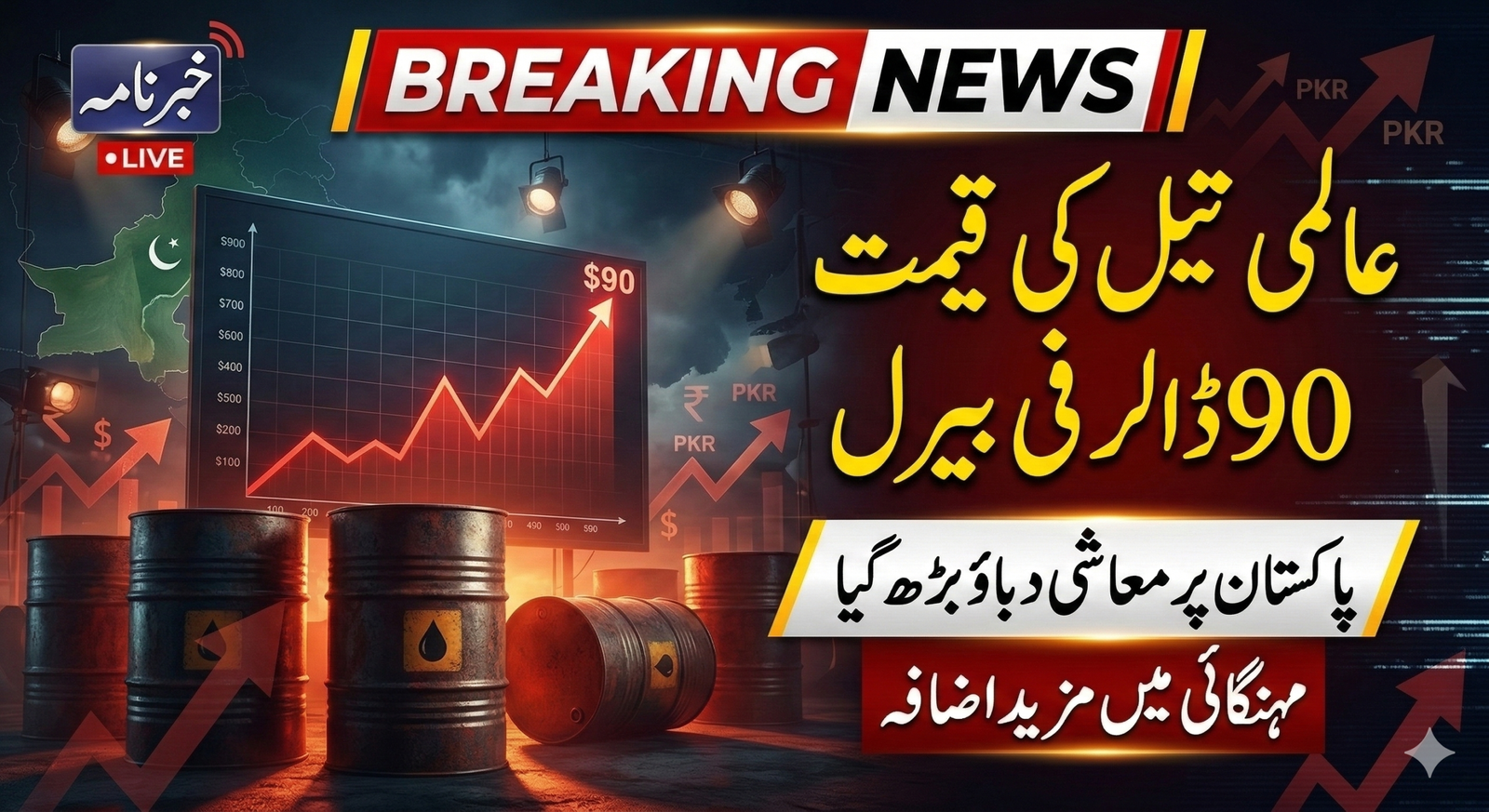
Economic Pressure on Pakistan: Global Oil Prices Hit $90 per Barrel
The world is currently witnessing a massive surge in energy costs, and the Global Oil Prices Impact on Pakistan is becoming a severe economic crisis. With international crude oil prices touching the $90 per barrel mark, the country faces unprecedented challenges.
The global energy market has recently witnessed a massive surge, with international crude oil prices touching the $90 per barrel mark. This represents the highest level seen in several months and has set off alarm bells for developing nations. For a country like Pakistan, which heavily relies on imported petroleum products to meet its energy needs, this spike is nothing short of an economic shock.
The immediate consequences of this global trend are already visible. The massive increase in global oil prices is directly translating into record-high fuel prices and skyrocketing inflation across Pakistan, placing an unbearable burden on both the government’s foreign exchange reserves and the common citizen’s wallet.
Also read
https://ehsaasbispinfo.com/petrol-price-inc…in-pakistan-2026/
Why Are Global Crude Oil Prices Rising?
Before understanding the local impact, it is essential to look at the global dynamics driving this surge. The journey of crude oil to $90 per barrel is fueled by several international factors:
Geopolitical Tensions: Ongoing conflicts in the Middle East and Eastern Europe have disrupted traditional supply chains, creating uncertainty in the global oil market.
OPEC+ Production Cuts: The Organization of the Petroleum Exporting Countries (OPEC) and its allies have maintained strict production cuts to stabilize and elevate market prices.
Post-Pandemic Demand Recovery: Industrial hubs in Asia and North America are consuming energy at a rapid pace, causing global demand to outstrip the available supply.
Direct Impact of $90/Barrel Oil on Pakistan’s Economy
The translation of global crude prices to the local Pakistani market brings a wave of severe economic challenges. Here is a detailed breakdown of how the $90 per barrel rate is damaging the national economy:
1. Massive Surge in Local Fuel Prices
Whenever the international market experiences an upward trend, the Oil and Gas Regulatory Authority (OGRA) is forced to revise local prices. With crude oil at $90, the ex-depot prices of Petrol and High-Speed Diesel (HSD) have seen unprecedented hikes. Because Pakistan is bound by the International Monetary Fund (IMF) agreements to keep the Petroleum Levy (PL) high and eliminate subsidies, the government has no choice but to pass the entire financial burden directly to the consumers.
Understanding the Global Oil Prices Impact on Pakistan is crucial because the country imports more than 70% of its petroleum requirements. Every time the barrel price goes up globally, local inflation skyrockets.
2. Skyrocketing Inflation and Cost of Living
Fuel is the engine of any economy. When diesel prices increase, the cost of transportation for all goods—including essential food items, vegetables, and medicines—shoots up immediately. This creates a ripple effect known as “cost-push inflation.” Transport associations inevitably raise their fares, and retailers increase product prices to cover their elevated freight charges. Consequently, the purchasing power of the average Pakistani citizen drastically decreases.
3. Depletion of Foreign Exchange Reserves
Pakistan imports more than 70% of its oil requirements. When global oil prices jump to $90 per barrel, the country’s import bill inflates massively. Paying for this expensive oil requires US Dollars, which puts immense pressure on the State Bank of Pakistan’s already fragile foreign exchange reserves. This high demand for dollars often leads to the depreciation of the Pakistani Rupee (PKR), making future imports even more expensive.
The Ripple Effect on Agriculture and Industry
The agricultural sector, which forms the backbone of Pakistan’s economy, relies heavily on diesel to run tube wells, tractors, and harvesters. Expensive diesel directly increases the cost of crop production, threatening food security and driving up wheat and sugar prices.
Similarly, the industrial sector, especially textiles, faces higher electricity tariffs and generator running costs. This increases the overall cost of manufacturing, making Pakistani exports less competitive in the international market compared to regional rivals like Bangladesh and India.
Conclusion: Is There a Way Out?
The current economic pressure due to global oil prices is a stark reminder of Pakistan’s urgent need to transition towards renewable energy sources such as solar and wind power. Until the country reduces its dependency on imported fossil fuels, it will remain highly vulnerable to global market shocks. For now, citizens must brace for tougher financial times, as relief seems unlikely unless international oil prices drop significantly.
Follow for Updates
Follow for daily scheme updates:
👉 WhatsApp Channel:
https://whatsapp.com/channel/0029Vb7MYua0gcfLWzto2T01
👉 Facebook Post/Page:
https://www.facebook.com/share/1Aaye4dKkC/
Frequently Asked Questions (FAQs)
Q1: Why do global oil prices directly affect Pakistan? Pakistan imports the vast majority of its crude oil and refined petroleum products. Because payments are made in US Dollars, any increase in the global price per barrel directly increases Pakistan’s import bill and local consumer prices.
Q2: What happens to inflation when petrol prices increase? An increase in petrol and diesel prices raises the cost of transporting goods. This additional cost is passed on to the final consumers, leading to an immediate rise in the prices of everyday items, which drives up the overall national inflation rate.
Q3: Can the government of Pakistan provide subsidies on petrol? Currently, under the strict conditions of the ongoing IMF bailout program, the government is restricted from providing unfunded subsidies on petroleum products to prevent the fiscal deficit from widening.
Q4: Where does the global oil price stand today? Currently, international Brent crude oil is hovering around the $90 per barrel mark, primarily driven by supply cuts and geopolitical tensions.
Professional Links for Further Reading:
Track real-time global crude oil prices at Bloomberg Energy.
Read detailed economic reports and indicators at the State Bank of Pakistan (SBP).
Understand global economic trends on the World Bank’s Official Portal
1 thought on “Global Oil Prices Impact on Pakistan: $90 per Barrel Crisis”