
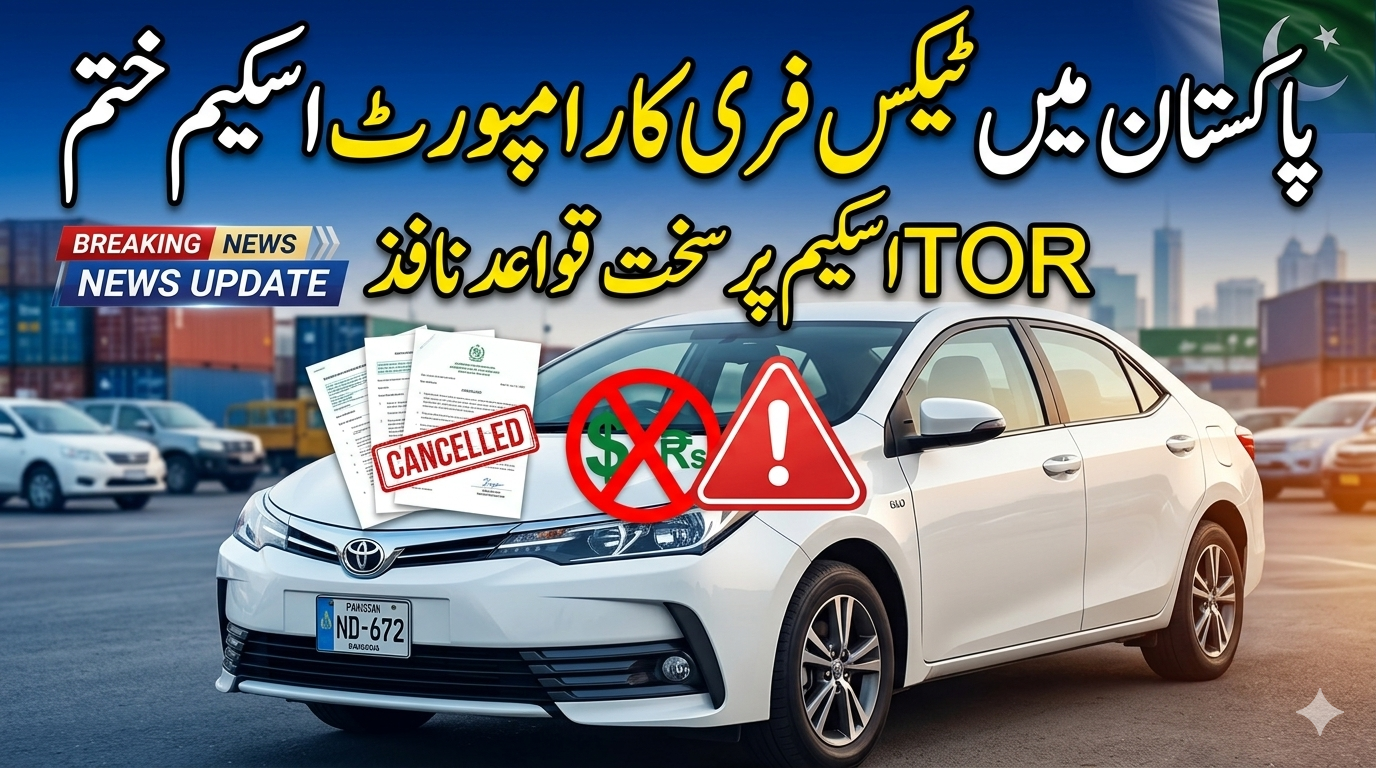
Pakistan Government & IMF Agree to End Tax‑Free Car Import Schemes
Pakistan Tax-Free Car Import Scheme: Government & IMF Reach New Agreement
The Pakistan tax-free car import scheme has undergone a massive transformation. Islamabad: The Government of Pakistan and the International Monetary Fund (IMF) have officially reached an agreement to abolish two major tax-free car import channels and impose much stricter regulations on the remaining options. This landmark decision affects how used and personal vehicles enter the country, aiming to align the automotive sector with international financial standards.
This move comes as part of ongoing negotiations under Pakistan’s Extended Fund Facility (EFF) and the Resilience and Sustainability Facility (RSF) with the IMF. These global financial bodies have emphasized the need for structural reforms and total financial transparency to stabilize the national economy.
This move comes as part of ongoing negotiations under Pakistan’s Extended Fund Facility (EFF) and the Resilience and Sustainability Facility (RSF) with the IMF, which have emphasized structural reforms and financial transparency. (The News)
Also read
PM Electric Bike Scheme 2026: Complete Eligibility & Apply Guide
Changes in Existing Schemes
According to government and IMF sources: (PakWheels)
Personal Baggage Scheme — will be completely discontinued.
Gift Scheme — will also be abolished.
Transfer of Residence (TOR) Scheme — will remain, but new stringent rules will apply.
Under the revised TOR scheme, only vehicles owned by individuals who have legally resided abroad for a minimum of one year (or more) will qualify for import. Documentation requirements and eligibility criteria have been tightened to prevent misuse.
Reasons Behind the Change
Authorities and IMF officials noted that the previous schemes were being widely exploited, leading to:
Vehicles being routed through third countries like the UAE before reaching Pakistan.
Overseas Pakistanis importing vehicles for personal use or business under false pretenses.
Illegal imports, tax evasion, and lack of transparency in vehicle registration and trade. (Gulf News)
The IMF recommended abolishing or reforming these schemes to ensure that the import process is transparent, compliant with global standards, and financially accountable. (PIDE Research)
Impact on Used Car Imports
The government has clarified that commercial imports of used cars up to five years old will still be allowed under regulated procedures. This step aims to balance market demand with fiscal discipline and prevent tax evasion.
Analysts predict that the move could affect the pricing of imported cars in Pakistan, potentially leading to higher costs for consumers initially, as the incentive of tax-free importation is removed. However, in the long term, it is expected to encourage local automotive manufacturing and streamline foreign exchange outflows.
Government Statement
A finance ministry official stated:
“We are committed to reforming the vehicle import system to ensure fairness and transparency while protecting the interests of Pakistani citizens and the national economy. The TOR scheme will continue but under strict eligibility checks.”
IMF Perspective
The IMF welcomed the government’s decision, noting that the removal of tax-free car import schemes is a step toward fiscal consolidation and strengthening the automotive sector’s compliance with international trade standards.
Follow for Daily Updates
Stay updated with the latest petrol prices, government schemes, and breaking news.
Facebook Page
https://www.facebook.com/share/17zB3qoEKA/WhatsApp Channel
https://whatsapp.com/channel/0029Vb7MYua0gcfLWzto2T01
Frequently Asked Questions (FAQs)
Q1: Which car import schemes are ending in Pakistan?
A1: The Personal Baggage Scheme and the Gift Scheme are being completely abolished.
Q2: Will the Transfer of Residence (TOR) scheme continue?
A2: Yes, but only for eligible individuals who meet stricter residency and documentation requirements.
Q3: Can used cars still be imported?
A3: Yes, commercial imports of used vehicles up to five years old will be allowed under regulated procedures.
Q4: Why did the government decide to end these schemes?
A4: The schemes were widely misused, leading to tax evasion, illegal imports, and financial discrepancies.
Q5: How will this affect consumers?
A5: Imported cars may become more expensive initially, but the reforms aim to stabilize the market and support local automotive production.
References & Professional Links: